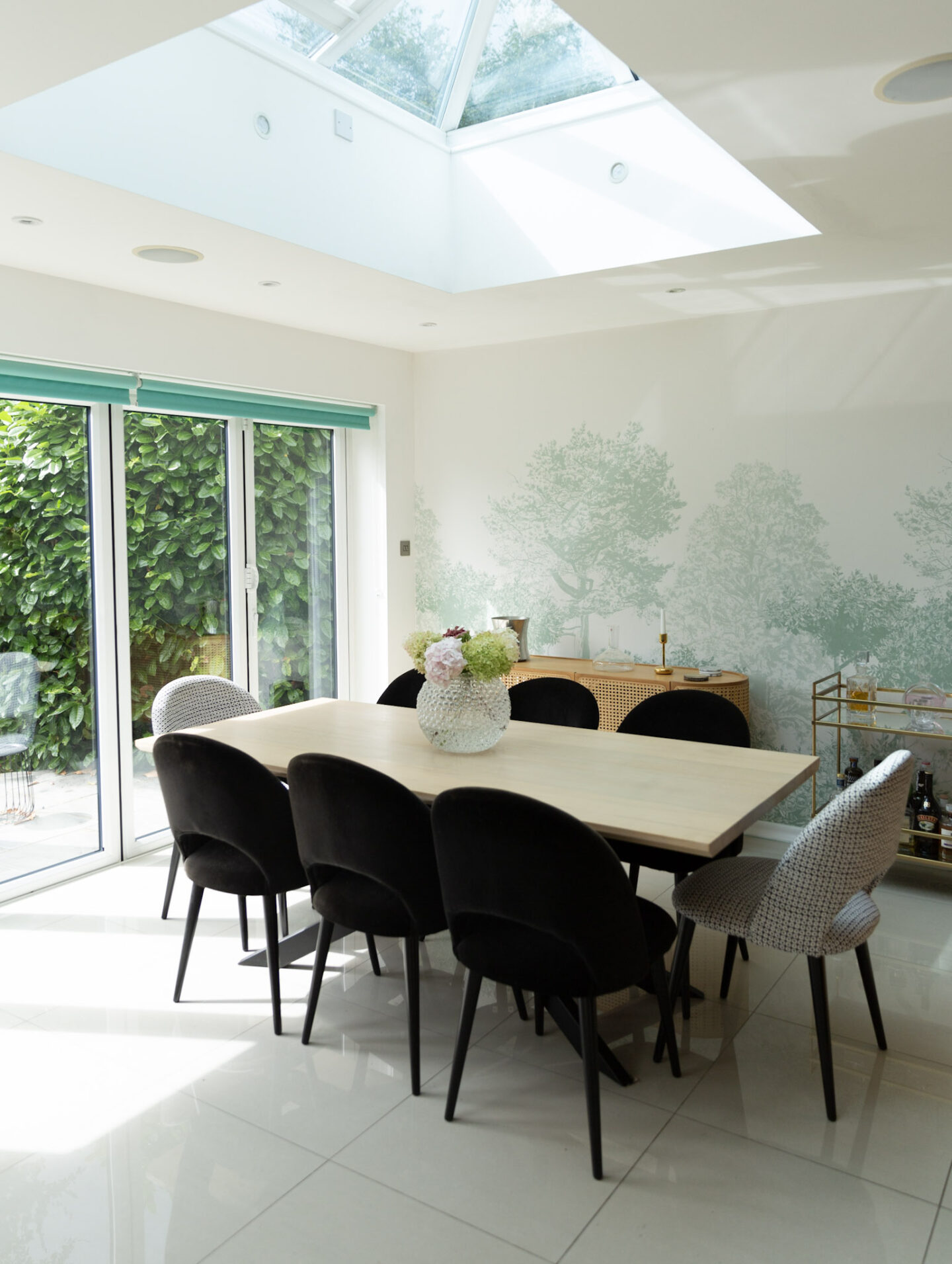
Modern homes are smarter than ever, but that doesn’t mean they have to look like high-tech showrooms. I feel lucky that we’ve already been able to weave some amazing tech into our home design, even though there’s still more we’d love to do. Smart lighting, Sonos throughout the house and a bespoke home cinema system have made such a difference. Each element has been seamlessly integrated into the interior, keeping every space feeling cohesive and balanced. If you’re planning to decorate, this article is for you. And if you’re renovating or building from scratch, now is the perfect time to think about how technology can naturally enhance your home’s character and personality.
Start with Strong Digital Foundations
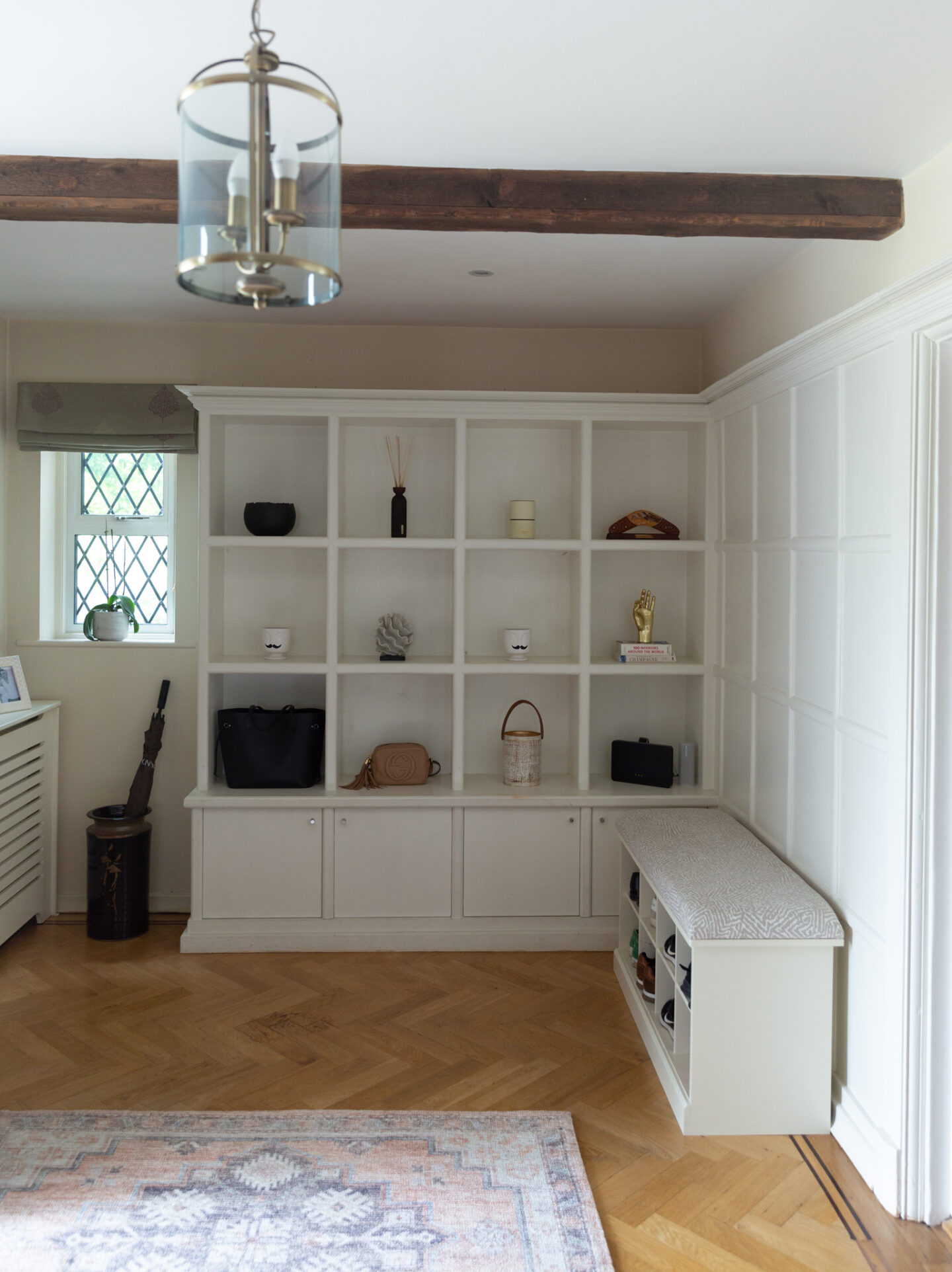
Before introducing any smart devices or connected systems, it’s worth investing in reliable infrastructure. That means ensuring you have strong, consistent connectivity throughout your home. Before you start upgrading your space, make sure to check for fast internet providers in your area so your devices stay connected and perform smoothly. If you work from home, this becomes even more important. Without a reliable infrastructure, nothing functions properly—and you won’t be able to enjoy all that lovely tech to its full potential.
Fortunately, there are a few things you can do yourself to keep everything running smoothly, from your security system to your smart lighting. If your home spans multiple floors like ours, consider installing more than one router to ensure strong coverage throughout. We have two routers and it has made such a big difference, especially with remote working.
Don’t forget to position your main router centrally (ours sits in the hallway), and if possible, plan your network layout during the design phase to avoid visible wires and clutter. Trust me—no one wants to see a tangle of cables behind the tech. A well-designed interior should hide them as much as possible without compromising performance.
Hide the Hardware, Highlight the Harmony
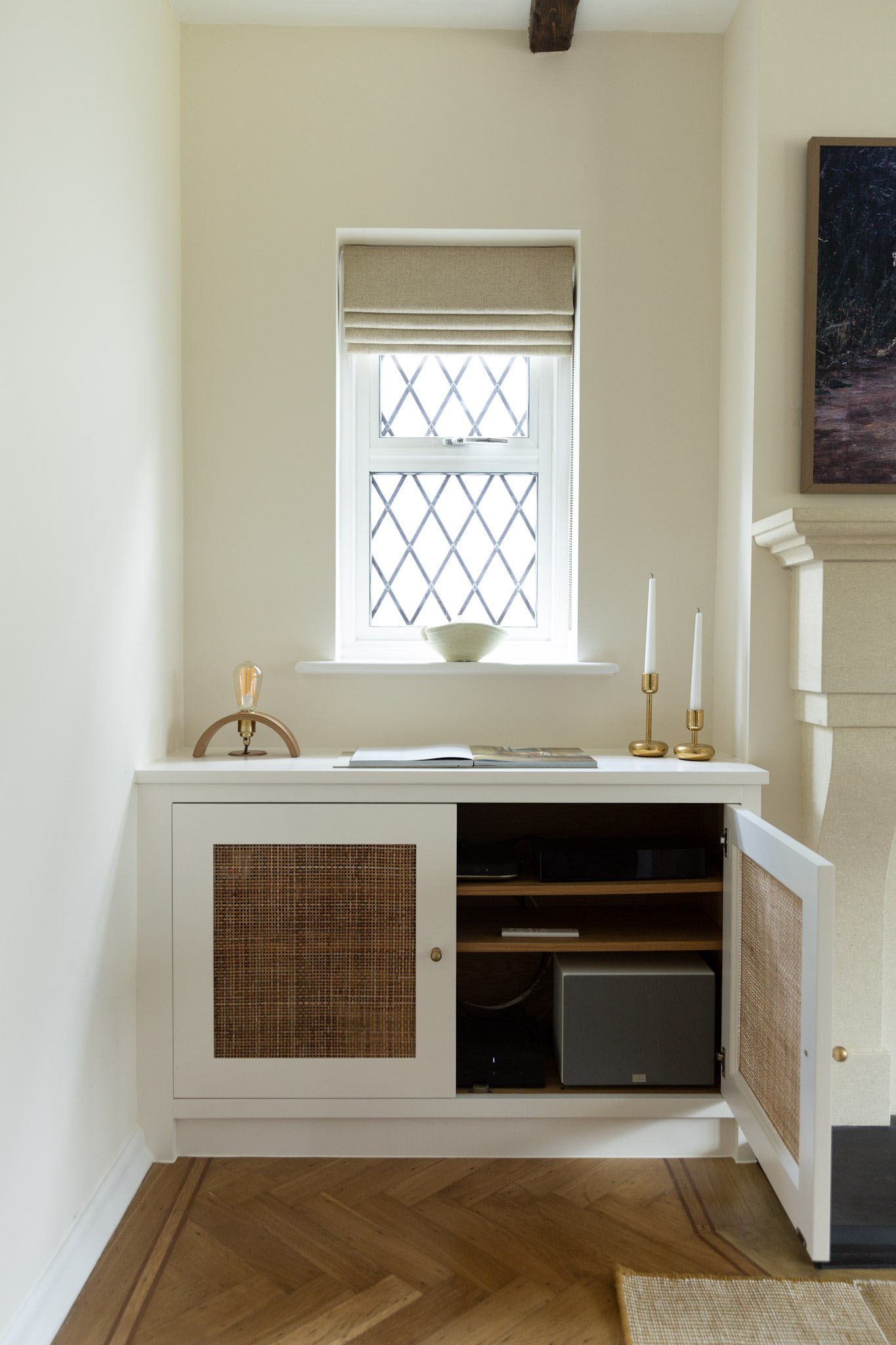
Smart devices don’t have to clash with your design. When in doubt, conceal any unsightly wires and gadgets to keep the look clean and cohesive.
- Built-in cabinets can house routers, smart hubs and consoles, keeping them accessible but invisible.
- Recessed charging stations in desks or kitchen counters eliminate cable mess while keeping devices powered.
- Frame-style televisions double as artwork when not in use, seamlessly blending entertainment into décor. I absolutely love mine!
The goal is subtle integration. When technology becomes part of the design rather than an afterthought, it supports a space that feels intentional and uncluttered.
Choose Tech That Matches Your Aesthetic
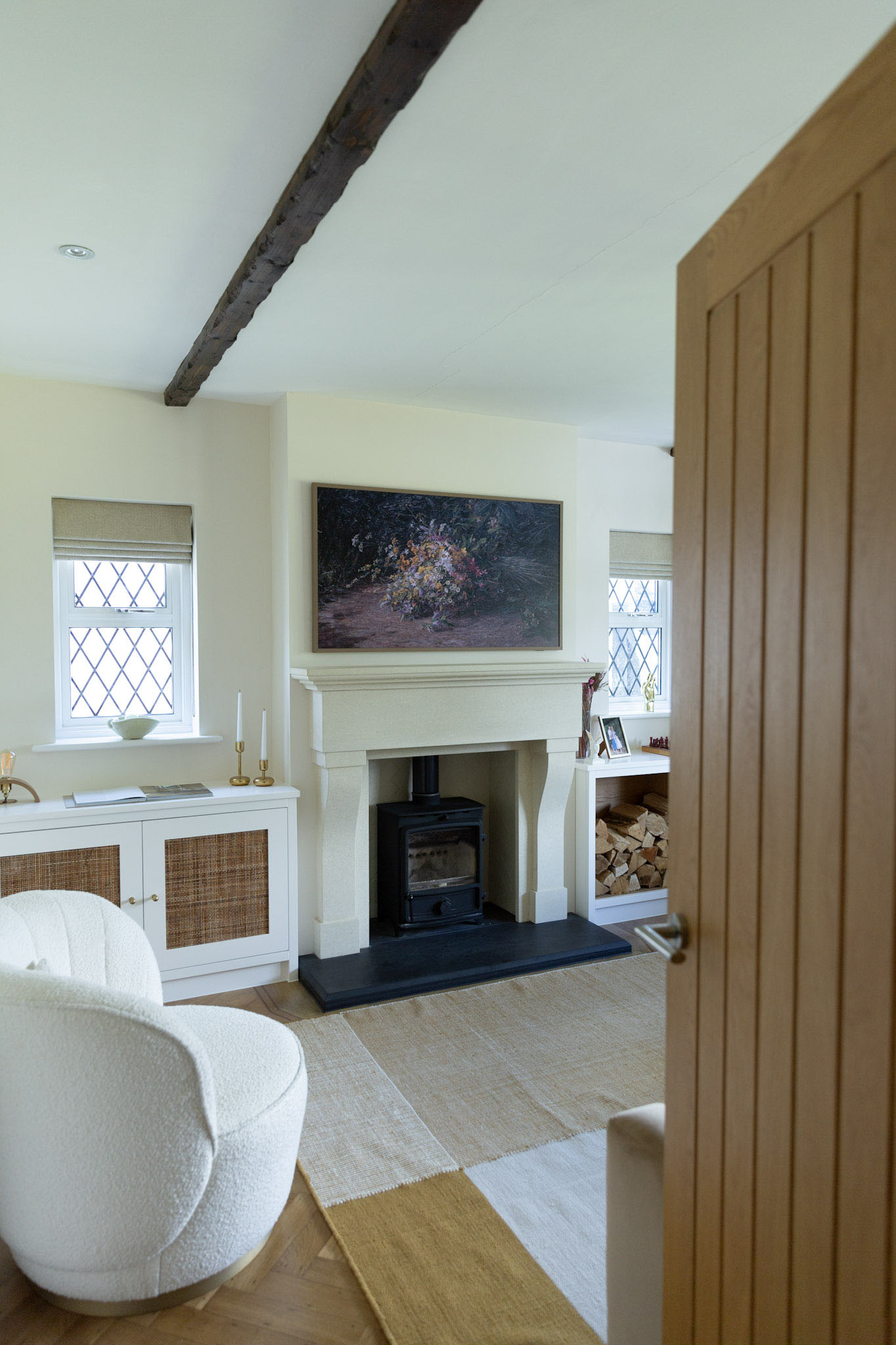
This one’s a no-brainer. Interiors are a way of life for me, and I couldn’t bear having tech that clashes with our home’s aesthetic. Thankfully, there’s no shortage of beautifully designed options these days. As technology continues to merge with lifestyle, manufacturers are prioritising aesthetics just as much as performance.
Choose finishes, colours, and textures that complement your furniture and fittings. Smart speakers now come in fabric, wood, or metal finishes. Thermostats and switches feature sleek, minimalist touch controls, and even lighting systems offer stylish wall panels or discreet hidden mounts.
And, if you prefer a minimalist look, go wireless whenever possible. For a more industrial or modern feel, visible cords and metallic accents can actually enhance the space rather than detract from it. The trick is to be deliberate — every visible piece of tech should feel like a design choice, not an intrusion.
Make Lighting the Bridge Between Comfort and Control
Smart lighting is one of the easiest ways to change the feel of your home. Beyond saving energy, it lets you adjust brightness, tone, and colour to suit your mood or activity.
Layered lighting — a mix of task, ambient, and accent sources — gives you flexibility throughout the day. Warm light in the evening helps you unwind, while cooler tones in the morning make it easier to focus. I always prefer having multiple small light sources than one big one— it just makes everything feel so much cosier.
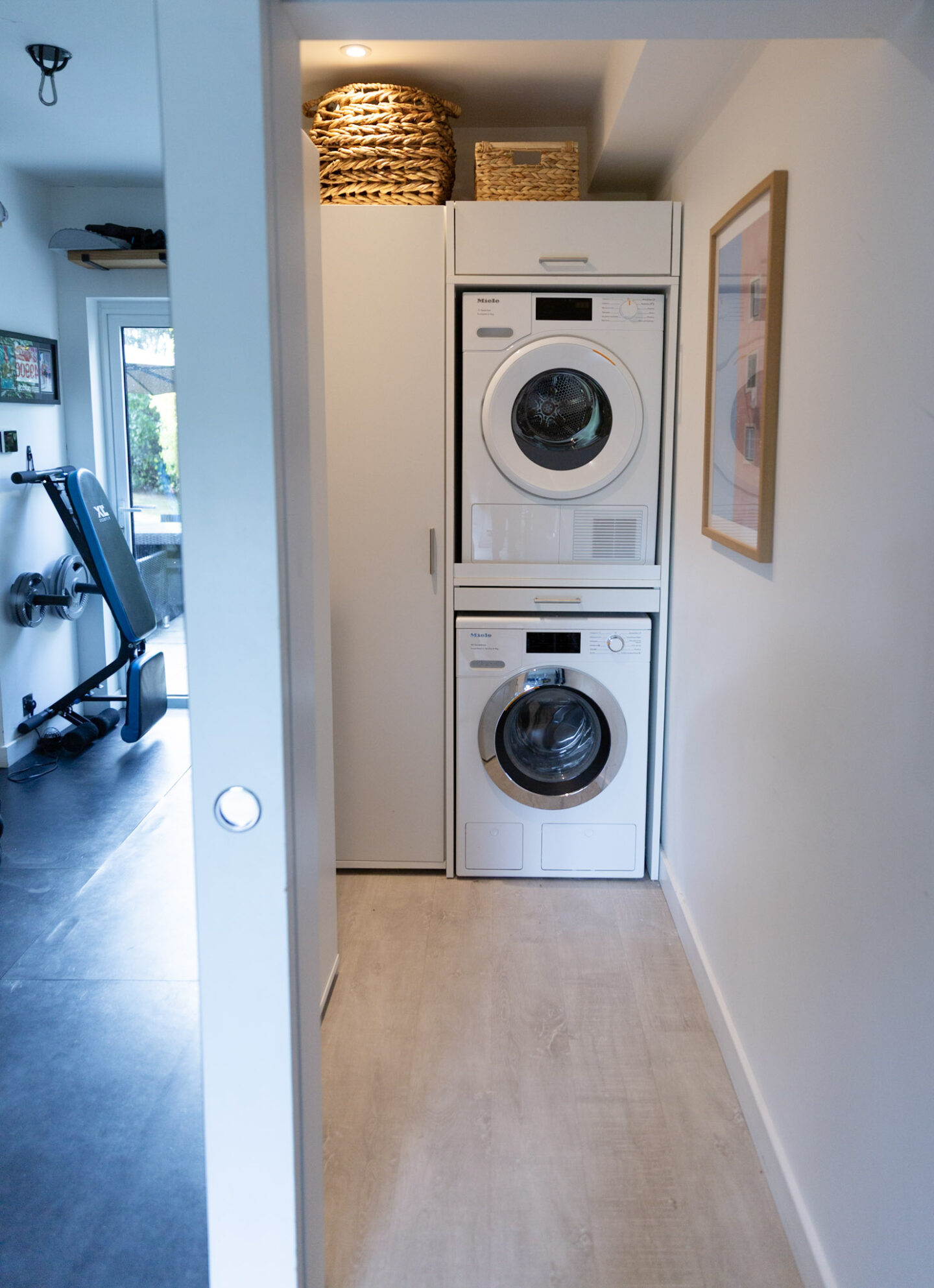
Adding motion sensors or setting schedules brings effortless convenience while keeping your design clean and cohesive. The motion-sensor lights were the best addition to our newly finished laundry room (see here!).
Also, when planning your lighting scheme, make sure your bulbs, switches and control apps all work together. This way, your space feels effortlessly stylish and perfectly functional.
Create Multi-Purpose, Smart Spaces
Technology isn’t just about gadgets — it’s about creating spaces that can adapt. The rise of remote working means we’re often blending work and personal life. This can have its downsides if not planned carefully, so creating multi-purpose, adaptable spaces is key.
Consider furniture and layouts that support multiple uses:
- A hidden projector that turns your living room into a cinema.
- A foldaway desk with built-in USB ports.
- A mirror that doubles as a fitness screen.
These features let your rooms adapt easily without messing with the overall look. With the right mix of tech and decor, your home can do more for you—without ever feeling like an office or a showroom.
Keep It Human: Balance Innovation with Warmth
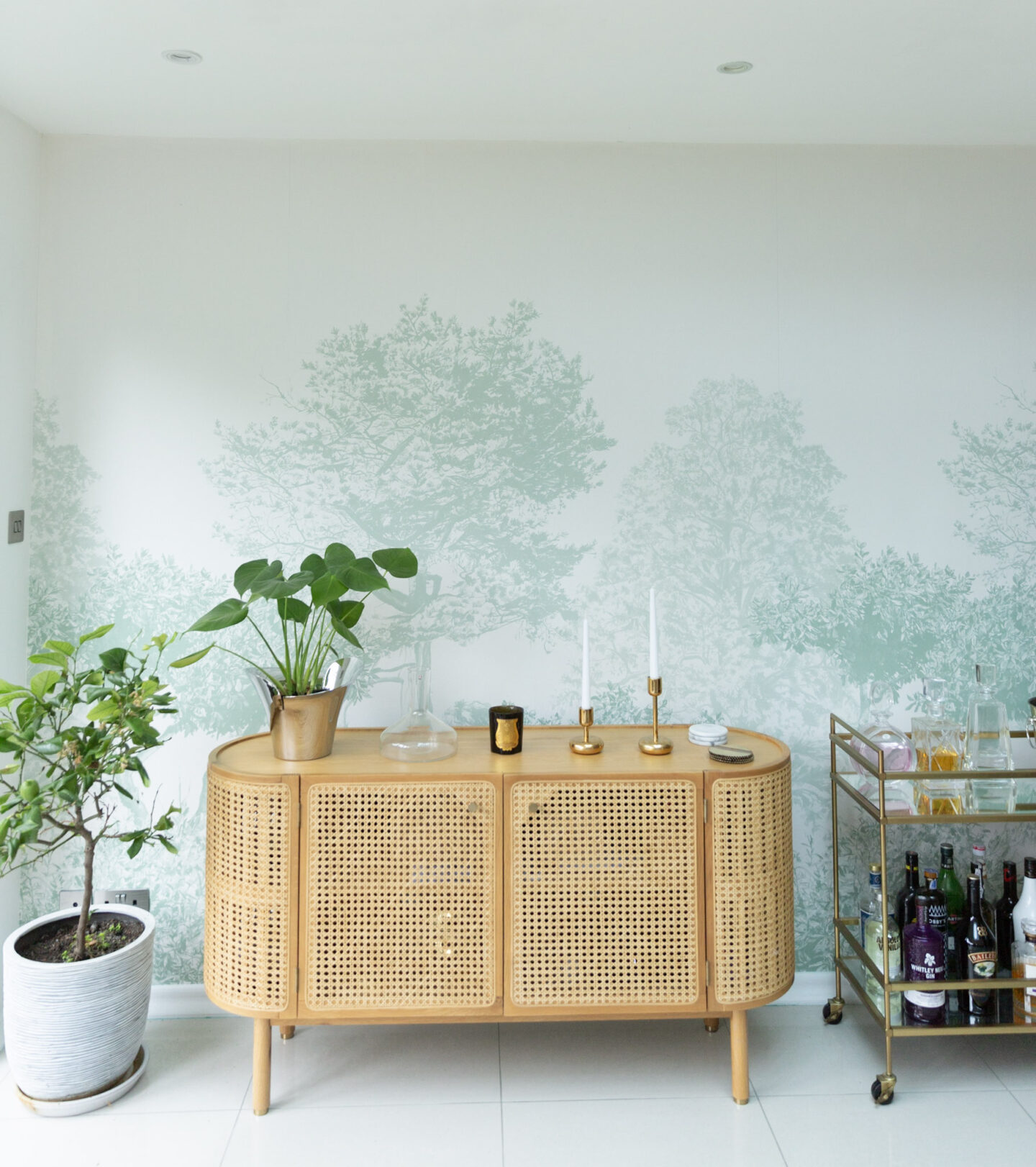
It’s easy to get carried away with technology when upgrading your space, but a home full of touchscreens and sensors can quickly start to feel cold and impersonal. The key is balance — focus on creating a space that works for you while still feeling warm and inviting. Natural materials like timber, linen, and stone help offset sleek digital elements while indoor plants add greenery and a sense of calm.
Personal touches like books, photos, and artwork bring in your personality — after all, nobody wants a home that feels like a showroom. Technology should make your life easier without taking away the human touch.
Designing the Future You’ll Want to Live In
I get really excited about the possibilities of smart homes — sometimes it feels like the sky’s the limit. Innovations are popping up all the time and even fairly basic things like smart lighting are becoming the norm. That said, I don’t ever want technology to take over — at least, I don’t. I want to live in harmony with it. Tech should quietly support your daily life while your home continues to reflect your personality. You should be able to forget it’s there and let it do its job, making life easier without compromising the warmth or style of your space.
By starting with a strong digital foundation, concealing hardware, choosing design-conscious products, and balancing innovation with warmth, you can create a home that feels cohesive, comfortable, and truly ready for the future.

