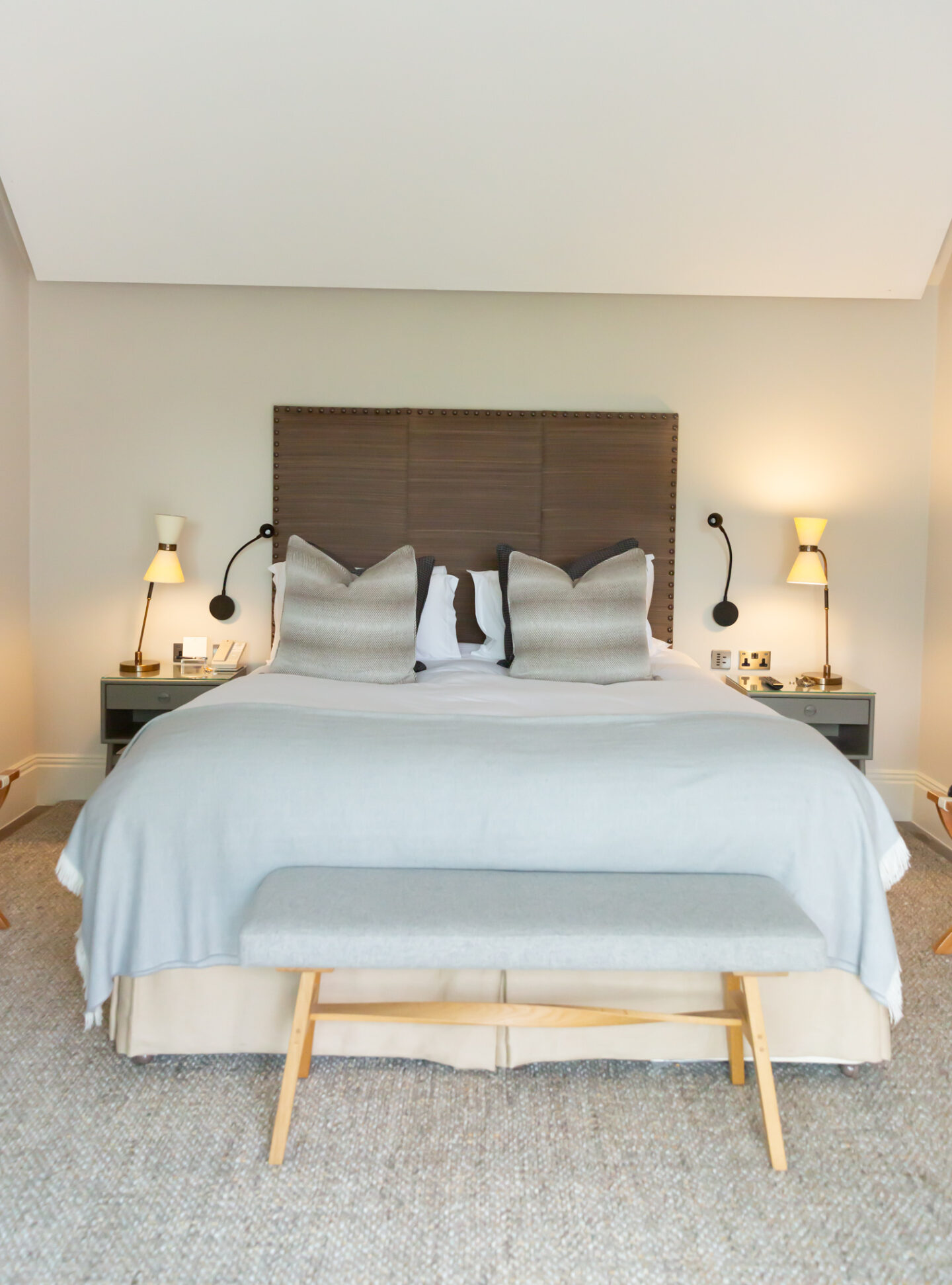
I’ve been struggling with this dilemma for quite some time now. I know that carpeting bedrooms is very much a UK thing, something you rarely see in Scandinavia. From a purely aesthetic and practical point of view, I’d choose hardwood floors in a heartbeat. But (and there are quite a few buts!) I can’t seem to make up my mind when it comes to our master bedroom renovation. I was almost set on hardwood until I realised it would likely be covered by a large area rug (one that wouldn’t be easy to clean without a proper rug cleaner anyway).
The original reasoning behind choosing hard flooring was my dust allergy. When you start researching the best flooring for allergy sufferers, hardwood floors almost always come up as the top recommendation. Carpet tends to trap dust, whereas hard floors are generally easier to clean and keep dust-free. I absolutely love the parquet flooring we have downstairs and had envisioned something similar in engineered wood for the bedroom. I keep picturing that effortless Parisian-chic bedroom style you see in perfectly curated Pinterest homes — elegant, airy, and timeless. On paper, it feels like the ideal choice, but we do live in misty England, in a house with its fair share of drafts, so that’s definitely something to consider too.
Anyway, let’s take a look at all the pros and cons I’ve come up with so far.
What Experts Say About Carpet & Allergies
I thought I’d start with the official advice from Allergy UK, which is fairly clear on the subject: if possible, carpets should be removed from bedrooms. It makes total sense. Carpets can trap dust mites and allergens, and bedrooms are where we spend a significant number of hours every day. The guidance also extends beyond flooring: soft furnishings, including curtains, should be washed regularly too. Now, anyone who has invested in bespoke curtains knows that washing them every few months isn’t exactly straightforward. Of course, wooden blinds might be a better option, but you need to dust those regularly, too. I completely understand that carpet is one of the main culprits when it comes to dust build-up. But the thing is, removing the carpet won’t magically eliminate my dust allergy. There’s a real possibility I could go ahead and switch to hardwood and notice very little difference.
For context, I do take antihistamines, and they help manage my symptoms. I’m allergic to so many things (trees, pollen, etc.) that I’d likely be taking them for most of the year anyway. I also run an air purifier daily, which helps to minimise the dust build-up. The thing is, we live in a 100-year-old house and, no matter how much I clean, it’s impossible to eliminate every trace of dust. It finds its way into tiny cracks, corners and between old floorboards — it’s simply part of living in an older home.
At this point, the goal isn’t total elimination (which frankly feels unrealistic) — it’s control. And if I’m honest, I’m managing perfectly fine as things stand. The more pressing concern is that both of my children also have dust allergies, so I try to keep their bedrooms as dust-free as reasonably possible. Which brings me right back to the question: is changing the flooring actually the game-changer I’m hoping it to be?
Hardwood flooring: pros & cons
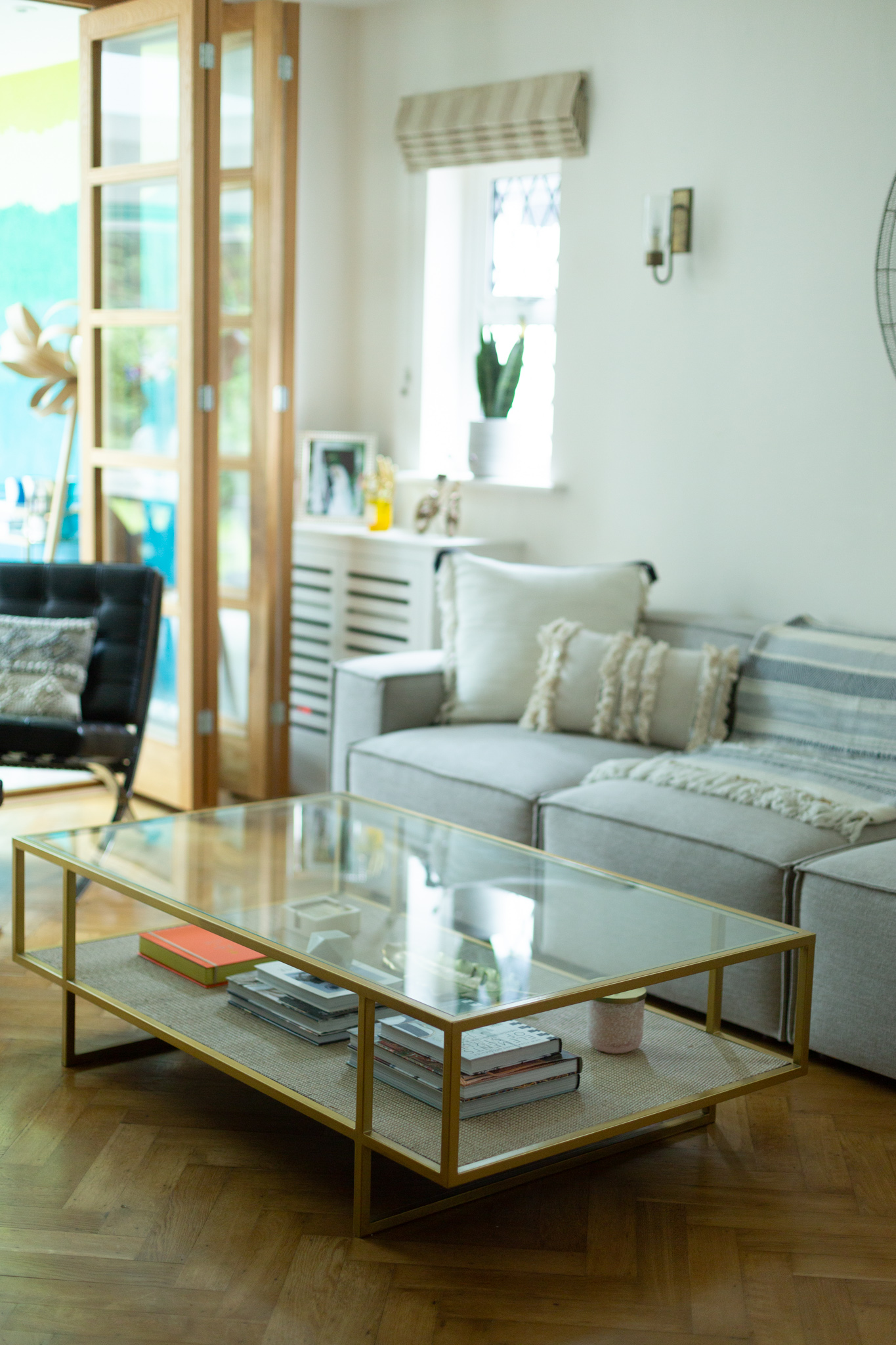
Let’s start with the positives. Hardwood flooring is beautiful and relatively easy to maintain. I love the idea of parquet flooring in a bedroom, especially to complement the French-style bed we already have. Wood floors are very popular right now, and they usually just need regular vacuuming and an occasional wipe-down to stay looking their best. Vinyl flooring is also considered ideal for allergy sufferers because it doesn’t trap dust and allergens in the same way carpet does. Unfortunately, I don’t like the look and feel of vinyl (although it can be very convincing nowadays!), so I’d only consider solid or engineered wood parquet flooring if I were to take that route.
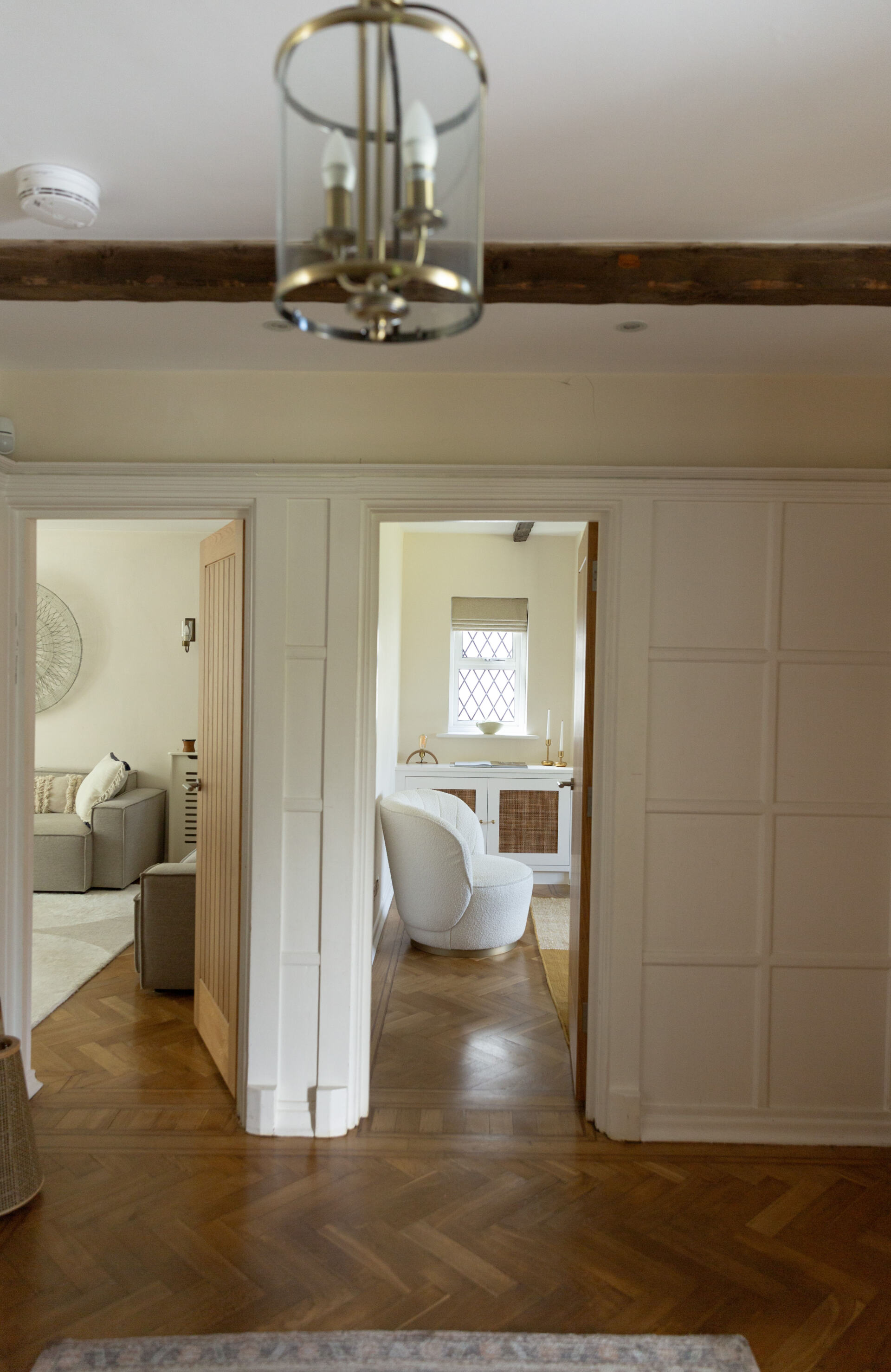
Of course, there are some downsides to hardwood flooring, too. The most obvious one is that it isn’t as warm or cosy underfoot, so you may find yourself adding rugs anyway. It can also scratch over time and may be a little noisy, which is worth bearing in mind. Wood flooring (especially parquet) is also expensive to install, which is worth taking into account. I’ve also heard mixed opinions regarding allergies. Hardwood flooring doesn’t trap dust in the same way carpet does, but instead, dust remains on the surface. While that makes it easier to see and clean, it can also mean that particles are more likely to circulate in the air if you’re not vacuuming frequently. That’s something I’m a bit concerned about. Although we do have an air purifier, I’m not particularly keen on the idea of dust floating around, and realistically, I don’t see myself vacuuming every few days either.
Best carpet for allergy sufferers
Although carpet isn’t generally considered ideal for allergy sufferers, there are ways to make living with it easier. When it comes to carpets and rugs, I always gravitate towards natural materials. Wool, in particular, is naturally hypoallergenic and more resistant to dust mites and mould than many synthetic alternatives. It’s also important to avoid high-pile styles and opt for a low-pile carpet instead. Shorter fibres mean less dirt becomes embedded deep within the carpet, making regular vacuuming far more effective. Spills and everyday messes are usually easier to deal with, too. And if I’m honest, I simply love the look and feel of wool. You can spot the difference instantly compared to synthetic carpet. It looks richer, feels more luxurious underfoot, and tends to wear beautifully over time.
Another advantage of wool is that it can be professionally cleaned if accidents do happen. I use a wool-safe spot cleaner on our rug downstairs, and in our previous house, we had the carpets professionally cleaned, and they came up beautifully. This does give me a little hope and makes me tempted to choose carpet for our bedroom again.
The room where the carpet is going
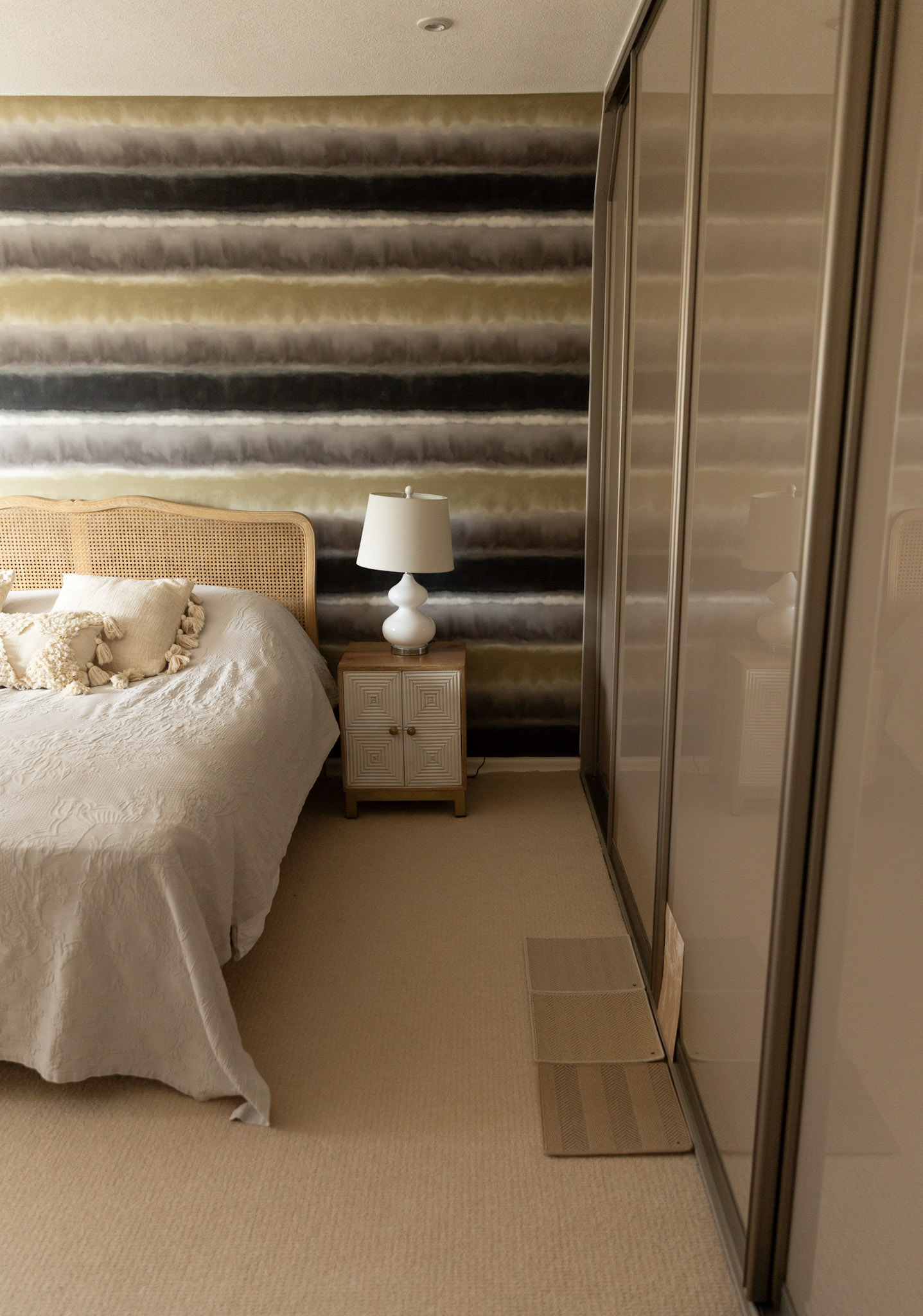
As I’m leaning towards carpet again, I’ve ordered a selection of samples to see how they look in our master bedroom. I did order a few wood flooring samples too, but if I’m honest, none of them really stood out to me. At the moment, carpet seems to be winning.
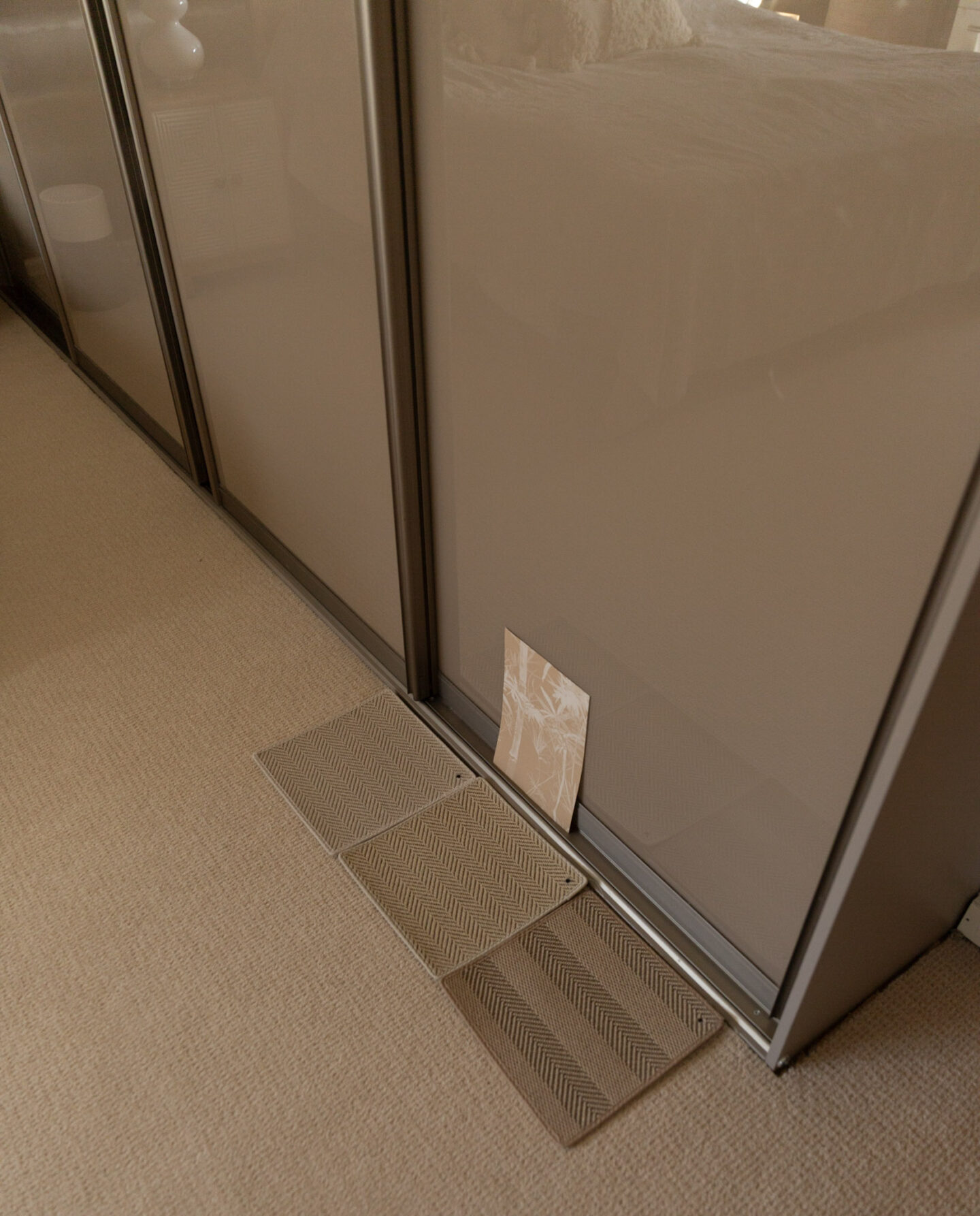
I fell in love with the herringbone pattern years ago when we carpeted the stairs in our old house. We chose a wool carpet from Alternative Flooring, and I absolutely adored it. I was so sad to leave it behind when we moved! It was so effortlessly chic. I’m very tempted to go back to the same range, although this time I’d choose a slightly darker shade. The colour Fonda (a warm beige with golden undertones) looks perfect alongside the wallpaper I’ve chosen, and I can really picture it working beautifully in the room. My aim is for the carpet to blend softly with the walls, as I don’t want anything competing with the wallpaper pattern. The herringbone design would still make a subtle statement of its own, but without overpowering the space. It’s definitely at the top end of our budget, but for a main bedroom (and possibly one or two other rooms), I think it’s worth the investment.
So, What Are We Choosing?
I haven’t completely made up my mind yet, but I’d say I’m 90% certain it’s going to be carpet. I originally had my heart set on parquet, similar to what we have in the hall, and on paper, it sounds perfect. But I’m starting to think it might not be the right choice for our bedroom. As stunning as parquet is, I worry I might regret it when it feels cold underfoot — especially if I end up covering most of it with a large rug anyway. It also comes in at nearly double the price of carpet, which would make it a very expensive mistake if I got it wrong.
I’d love to hear your thoughts. If you suffer from allergies, have you found hardwood flooring to be better than carpet? Or did it make little difference? Let me know in the comments!

